



The 2010s were an unusual economic decade as there was a long recovery from the Great Recession without a major economic shock in the United States. We look at the trends that defined the era, including falling unemployment, the rise of smartphones, the growth of the gig economy, and the emergence of Bitcoin. Along the way, we debate whether Obamacare was the decade’s most important policy and whether low interest rates set the stage for some of today’s economic challenges. The result was a fascinating look at how many of today’s economic realities were built during the 2010s.
In this episode, we talk about:
Why the 2010s may be remembered as the “recovery decade.”
The economic impact of smartphones, apps, and Bitcoin.
Which trends from the 2010s still shape the economy today.
The rise of gig work and changing labor markets.
Obamacare and the decade’s biggest policy battles.
If you liked this conversation, you might also enjoy
This Week’s Drinks 🍻
Jadrian is still working through a Sam Adams variety pack, with this week’s contribution being a Breakaway Blonde. Matt just got back from a cruise up to Halifax, and he’s cracking open a Tiny Angus from Breton Brewing Co. The beer itself wasn’t the entire story, though. The real adventure involved hauling a giant box of Canadian beer off the cruise ship after discovering that local liquor stores sold individual cans from regional breweries.
Name That Stat 📊
Our numbers this week ranged from timely to topical. Matt shared the annual compensation of FIFA President Gianni Infantino, sparking a conversation about whether that figure is too high, too low, or about right compared to leaders of other major sports organizations.
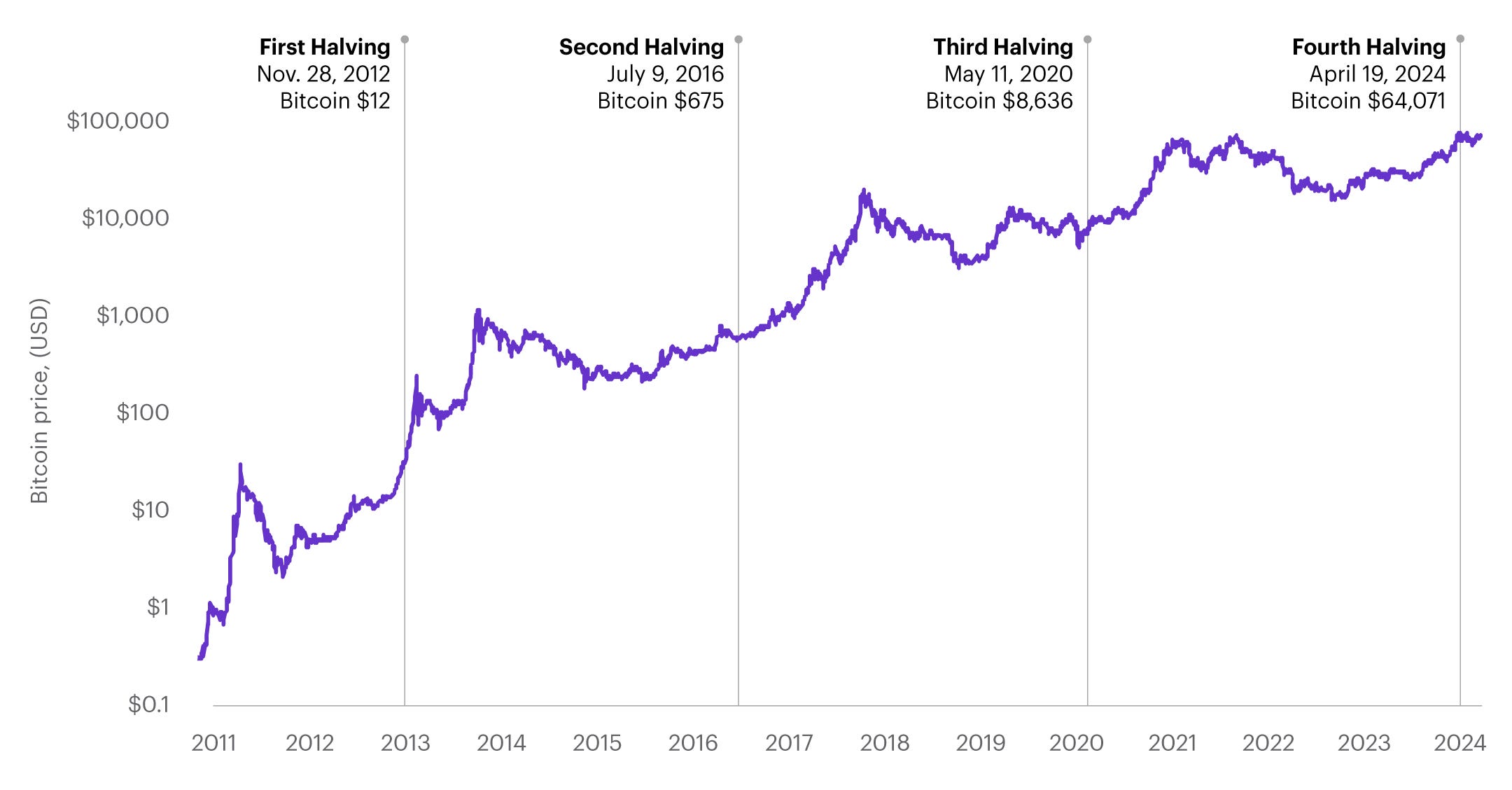
We initially skipped Jadrian’s number entirely, but remembered it midway through the episode. Fortunately, his statistic fit perfectly with our discussion of the 2010s, focusing on the amount of Bitcoin involved in the first-ever commercial purchase of two pizzas.
Show Notes
When people think back on economic history, they usually remember dramatic moments: crashes, recessions, bubbles, or breakthroughs. That’s what makes the 2010s such an interesting decade. One of the defining features of the period may have been the lack of a single major disruptive economic event in the United States. Instead, the decade was largely shaped by a long recovery from the Great Recession and a steady return to economic normalcy.
While events like the European debt crisis, concerns over government debt, and political movements such as Occupy Wall Street and the Tea Party captured headlines, much of the economic story centered on slowly improving labor markets, rising household incomes, and a return to economic stability.
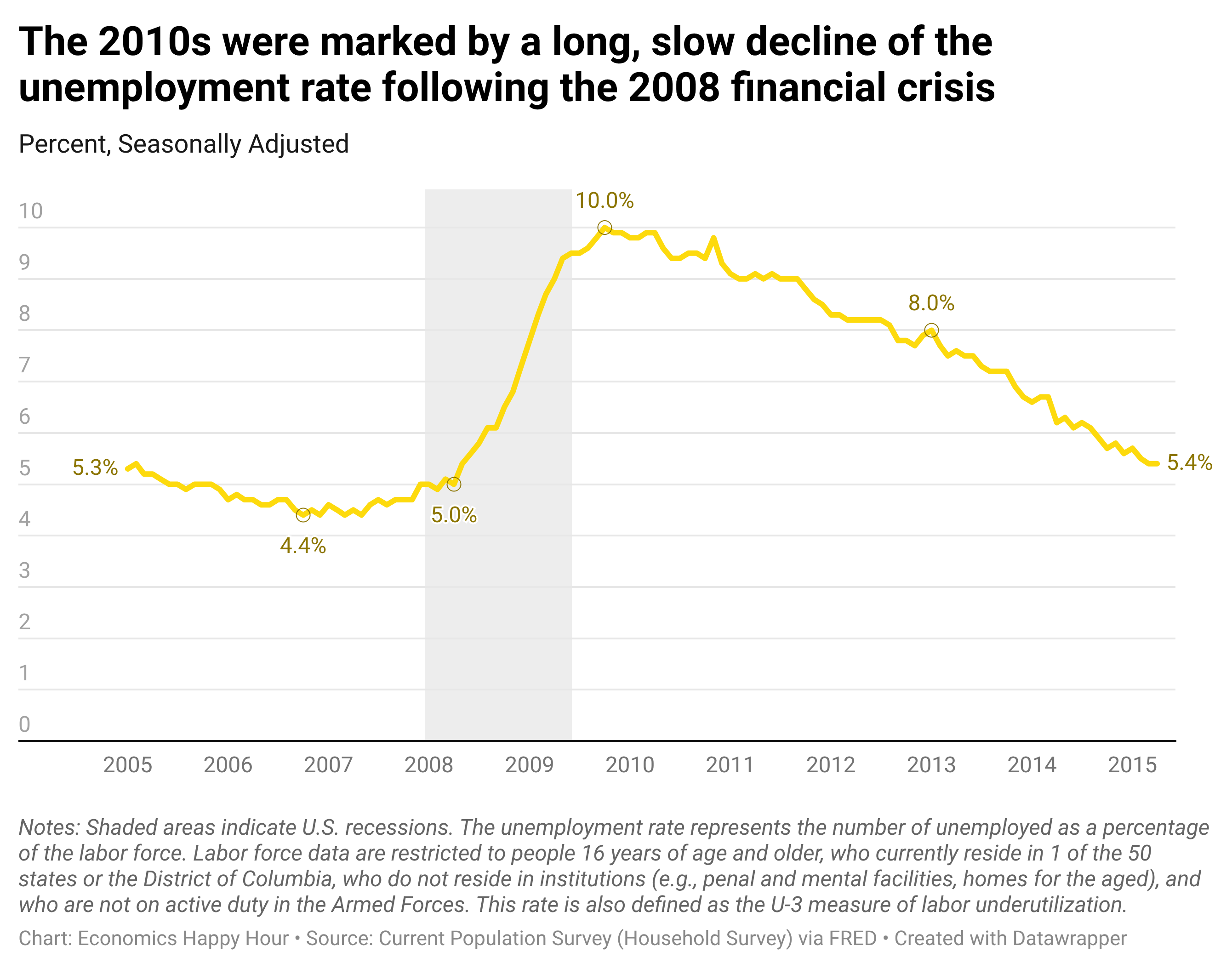
Unemployment fell from nearly 10% at the start of 2010 to just 3.6% by the end of 2019. At the same time, labor force participation drifted lower as Baby Boomers retired and some workers left the labor market altogether. The result was an economy that slowly but consistently tightened, eventually producing stronger income growth in the latter half of the decade.
With the benefit of hindsight, there are several candidates for the decade’s most important economic development. One contender was the rise of the gig economy. Companies like Uber and Lyft normalized flexible work arrangements and created entirely new ways for people to earn income. What felt revolutionary at the time now feels so commonplace that it’s easy to forget how quickly these platforms transformed labor markets.
Several other developments quietly reshaped the economy. Fracking dramatically increased domestic energy production and helped keep energy prices lower than they otherwise would have been. Meanwhile, Bitcoin and cryptocurrency emerged from niche internet experiments into assets that would eventually become part of mainstream financial conversations.
But if there was one innovation that connected nearly every major trend of the decade, it was the smartphone, which fundamentally changed how Americans navigate, shop, pay for goods, consume media, communicate, and even work. Ride-sharing apps, mobile banking, streaming services, social media, GPS navigation, and countless other conveniences all became possible because powerful computers migrated into our pockets. Looking back, it’s hard to imagine any other technology having a larger effect on daily life during the 2010s.
Finally, no discussion of the decade would be complete without policy. The Affordable Care Act dominated political and economic debates throughout the 2010s, generating intense disagreement that continues today. Of course, this decade also saw regulatory reform, rising federal debt, and the broader political backdrop of the Tea Party movement and Occupy Wall Street. Whether you view these developments as successes, failures, or something in between, they helped define the economic and political landscape that carried into the 2020s.
Economists love making lists, and we’re willing to admit ours might be incomplete. What did we miss? If there’s a defining economic moment from the 2010s that deserves more attention, tell us in the comments and make your case.
Pop Culture Corner 🍿
Jadrian kept things topical with a look back at Shark Tank, one of the defining television hits of the 2010s. Beyond the memorable pitches and dramatic negotiations, the show offers a surprisingly useful way to teach economics. In the middle of the decade, a group of economists developed lesson plans and classroom activities built around selected clips from the show, using them to explore entrepreneurship, costs of production, and business decision-making.
Matt’s selection was Hadestown, the acclaimed musical inspired by the myth of Orpheus and Eurydice. While the story is set in a post-apocalyptic world with strong Great Depression-era influences, it raises questions about migration, opportunity, labor, and economic hardship that connect surprisingly well to many of the issues discussed throughout the episode.
Have a question or topic idea? Reply to this email or drop it in the comments!


