



Explore the current state of financial literacy as we celebrate Financial Literacy Month. We walk through the “Big 3” financial literacy questions and discuss how surprisingly few people answer them correctly. For many people, financial knowledge is learned through experience rather than formal education, but that’s starting to change as more states push for personal finance requirements.
In this episode, we talk about:
What Financial Literacy Month highlights and why it matters
The “Big 3” financial literacy questions and how people perform on them
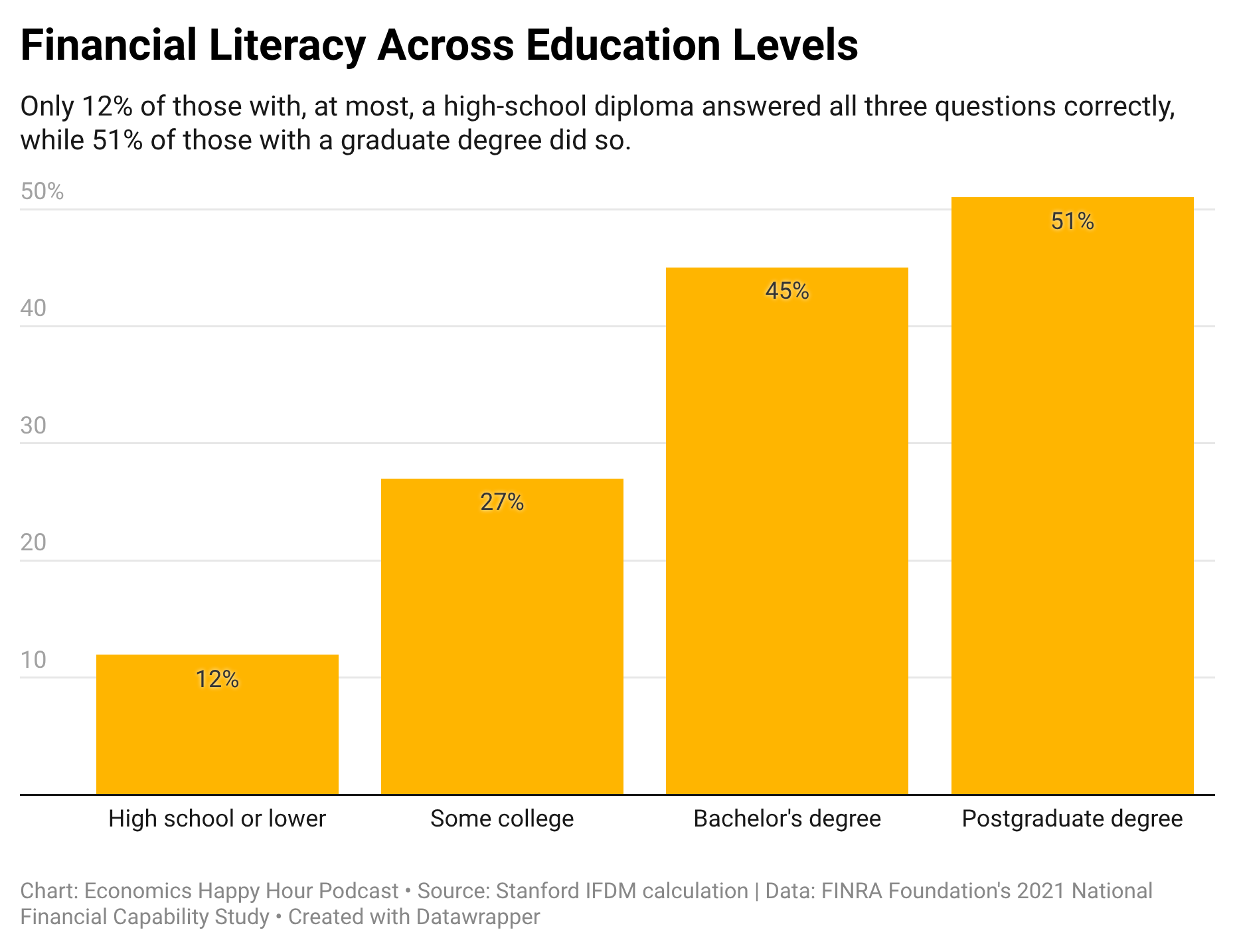
Gaps in financial knowledge across education levels
How personal experiences shape financial understanding
Simple, practical advice for managing money more effectively
If you liked this conversation, you might also enjoy
This Week’s Drinks 🍻
Jadrian is working through a spring variety pack from Samuel Adams, featuring the Breakaway Blonde. Matt has cracked open an Edelmeister IPA from Poland, even though he’s never been to Poland and isn’t entirely sure where this one came from. It’s the middle of April, which means the end of the academic year is approaching. Things are getting busy, but it’s also a time filled with celebrations, ceremonies, and opportunities to recognize students’ accomplishments.
Name That Stat 📊
April is Financial Literacy Month, which sets the stage for a conversation about how well people actually understand basic financial concepts, and the answer is: not as well as you might expect. Matt shares a statistic on the average retirement balance for people in their early forties, while Jadrian highlights how people perform on the Big 3 financial literacy questions across different education levels.
Show Notes
This week’s conversation focuses on how little formal financial education many people receive growing up, and how most people end up learning about money in practice. Even with advanced degrees in economics, it’s easy to feel unprepared when making real financial decisions for the first time. Much of our own understanding came through trial and error: credit card mistakes, missed payments, and learning how interest works in real life. These experiences can be costly, but they often become important turning points in building financial awareness.
The “Big 3” questions cover topics on compound interest, inflation, and diversification, and can serve as a simple benchmark for financial literacy. Many people struggle with them, even though these concepts appear in economics courses. That raises a bigger question: are we teaching these ideas in a way that connects to people’s everyday financial decisions? There may be room to better bridge the gap between economic theory and personal finance.
Finally, we share some practical advice based on both experience and common guidance. The most consistent recommendations tend to be: (1) build an emergency fund, (2) understand how interest works, especially on debt, (3) avoid carrying credit card balances, and (4) take advantage of employer retirement matches. More than anything, financial success comes down to building consistent habits rather than chasing perfect strategies. Small, steady decisions matter more than people often realize.
Do you think we missed something that should be on that list? Let us know in the comments!
Pop Culture Corner 🍿
Jadrian went with the song $ave Dat Money by Lil Dicky, which humorously focuses on cutting costs and avoiding unnecessary spending. He’s trying to do something that other rappers just can’t seem to understand. (Warning - NSFW.)
Matt brings up an episode of Cheers where Rebecca, facing financial struggles at the bar, thinks the best plan is to use petty cash to buy lottery tickets. It’s definitely an example of questionable financial decision-making.
Matt also recommends two books for those interested in personal finance: To Die with Zero and The Simple Path to Wealth. Both offer thoughtful perspectives on money, though they approach the topic from very different angles.


Have a question or topic idea? Reply to this email or drop it in the comments!


