



Prediction markets allow people to bet on future events, from elections to economic data releases, with prices reflecting the crowd’s expectations. Economists often view them as powerful forecasting tools because participants have money at stake, which can lead to more accurate predictions than traditional polling. But these markets also raise concerns about manipulation, insider information, and ethical questions about what events should be traded. Together, we explore both the promise and the risks of prediction markets.
In this episode, we talk about:
What prediction markets are and how event contracts work
Why prediction markets often outperform traditional polling
The role of incentives and “skin in the game” in improving forecasts
The potential for insider information or manipulation in these markets
Whether prediction markets should be regulated like gambling or financial markets
If you liked this conversation, you might also enjoy
This Week’s Drinks 🍻
We’re checking in together a little earlier than normal since we each have Spring Break trips coming up soon. Matt brings a Ring the Bell American Lager from Conshohocken Brewing Company. In a rare day when he has an IPA and Matt does not, Jadrian opens Liftoff, a West Coast IPA from Daredevil Brewing Company in Indiana, courtesy of a colleague who brought beers to JETSet.
Name That Stat 📊
Jadrian shared the number of companies that have filed lawsuits against the federal government seeking tariff reimbursements after a recent Supreme Court ruling. Matt followed with a second number that sparked today’s conversation: the amount a tax economist bet on a prediction market that last year’s DOGE push wouldn’t meaningfully reduce federal spending.
Show Notes
Matt’s contribution helped us set up a broader discussion of prediction markets. These platforms allow participants to buy and sell contracts based on the outcomes of future events. Contracts usually trade between zero and one dollar, paying out one dollar if the event occurs and nothing if it doesn’t. In practice, the price reflects the market’s estimate of the probability of an event happening. These markets cover everything from elections and economic indicators to corporate decisions and sports outcomes.
The tax economist in the story reportedly wagered his life savings that federal spending would remain high despite political pressure to reduce it. His reasoning was grounded in a simple economic insight: entitlement programs make up such a large share of federal spending that short-term policy pushes are unlikely to meaningfully reduce overall expenditures. The bet paid off and illustrates how people with specialized knowledge can profit when they believe markets are mispricing an outcome.

We also discuss why economists have long been fascinated by prediction markets. Unlike opinion polls, participants have money on the line, which encourages them to reveal their true beliefs. This “skin in the game” helps prediction markets aggregate information across many individuals and often makes them surprisingly accurate. Some companies have even experimented with internal prediction markets to forecast sales or project outcomes, sometimes outperforming traditional forecasting methods.
Of course, prediction markets also raise difficult questions. If someone has inside knowledge or the ability to influence an outcome, they could potentially manipulate the market. Examples range from bets about public speeches to speculation about political behavior. These situations blur the line between information discovery and market manipulation.
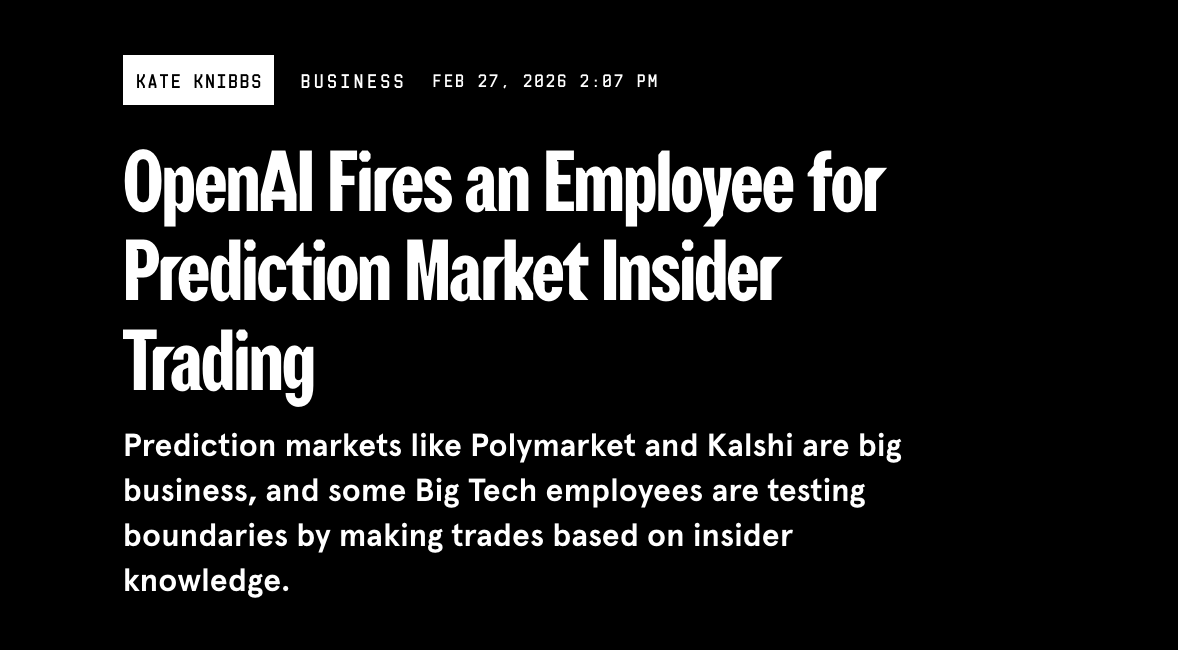
That leads to the broader policy question: how should prediction markets be regulated? They sit somewhere between gambling and financial markets, and it’s not always clear which rules should apply. Some regulation may be necessary to prevent manipulation or insider trading, but too much could eliminate a tool economists believe provides valuable information about future events.
If you could create a prediction market about anything, what event would you want people betting on?
Pop Culture Corner 🍿
Jadrian contributed a clip from an Anderson Cooper segment highlighting a man who spent hundreds of dollars trying to win an Xbox at carnival games, but eventually drained his life savings in the process. It should be seen as a cautionary tale about gambling and risk-taking.
Matt shares a short clip from a YouTube creator who bets $100 per day on different events in prediction markets. In the clip, the bettor wagers that a State of the Union speech will last longer than 115 minutes and nervously watches the speech unfold as applause and interruptions stretch the clock. The bet ultimately loses when the speech ends just short of the target time.
Have a question or topic idea? Reply to this email or drop it in the comments!


