



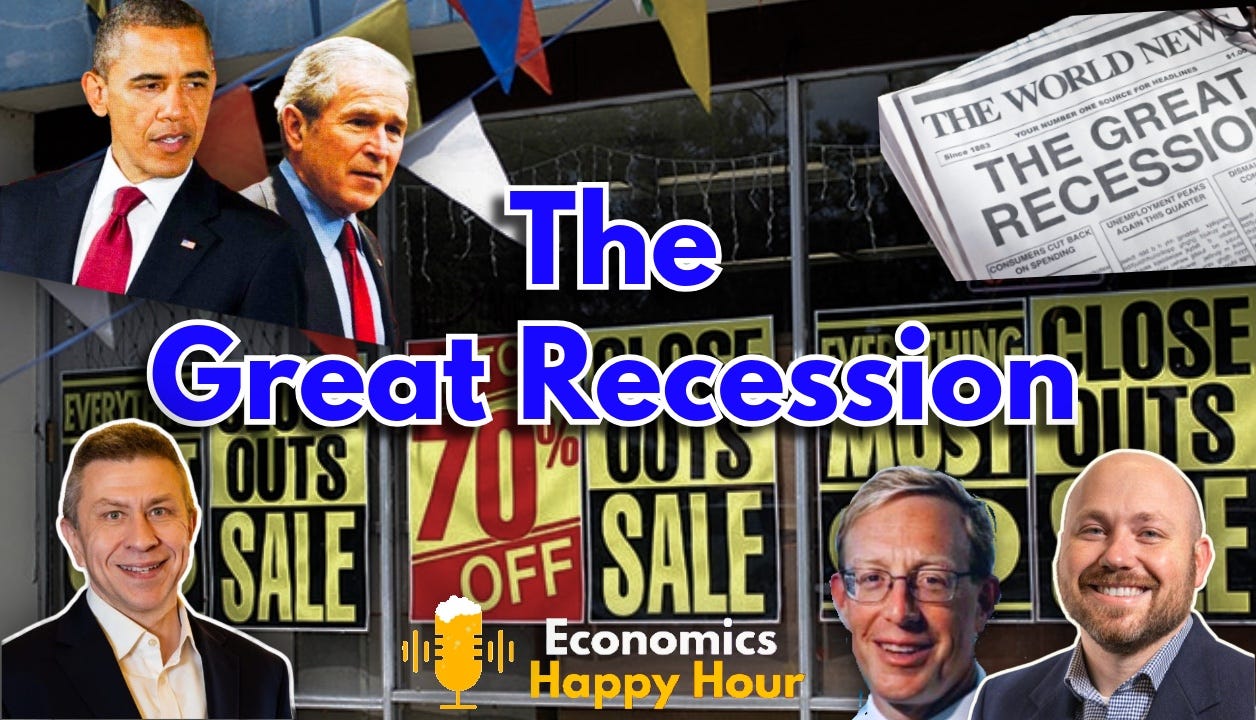
The 2000s were so important, we needed a Part 2 to tackle the Great Recession. We unpack how easy credit, soaring housing prices, risky lending, and the financial system combined to create the biggest economic crisis since the Great Depression. Along the way, we debate whether the government bailouts were the right call and talk about the long-term effects that still shape housing, lending, higher education, and personal finance today.
In this episode, we talk about:
What caused the Great Recession and why there wasn’t one single culprit
The housing bubble, subprime mortgages, and why banks kept lending
Whether TARP and the bank bailouts were unpopular necessities or policy mistakes
How the recession permanently changed lending, mortgages, and borrowing
Why the effects of 2008 still show up today through demographics, higher education, and attitudes toward debt
Check out the first part of this conversation when we unpacked the rest of the 2000s:
This Week’s Drinks 🍻
We may be recording on the same day, but that doesn’t mean the drinks need to stay the same. Brian stuck with his cocktail tour of the decade by switching from a mojito to a Cosmopolitan. In contrast, Jadrian switched from his Pickle PBR to something a little more local: Richmond Lager from Hardywood Brewery. Matt stuck with his Summer Shred Hazy IPA from Ever Grain Brewing.
Name That Stat 📊
We stuck with the 2000s themes for our stats this week with data on the amount of value that was destroyed when Enron collapsed, the number of votes that decided the 2000 presidential election in Florida, and the number of banks that failed during 2008. The stats for this week’s episode help frame just how unusual the decade really was.
Show Notes
The aughts were such an important decade that we had to tackle it in two parts. We previously looked at the economy right before it arrived at the edge of the cliff. This episode is about what happened after it went over. The Great Recession reshaped the economy for a long time: unemployment stayed elevated for years, the financial system nearly collapsed, and the recovery became a defining economic experience for an entire generation. If you haven’t listened to Part 1 yet, that’s the perfect place to start before jumping into this episode.
The Economy by Decade: The 2000s (Part 1)

The 2000s began with a strong economy, low unemployment, growing globalization, and plenty of optimism left over from the 1990s. Then came the dot-com crash, 9/11, China’s entry into the World Trade Organization, major manufacturing job losses, and a sharp increase in federal debt. We look at how those events reshaped markets, jobs, government spending,…
We started our conversation by trying to figure out what actually caused the crisis. There’s no single bad decision. Instead, there were several forces that reinforced one another: historically low interest rates, rapidly rising home prices, increasingly risky mortgages, political pressure to expand homeownership, banks making loans they should have questioned more carefully, and the widespread belief that housing prices simply wouldn’t fall. With all of that we eventually saw falling home values, mortgage defaults, and failing financial institutions.
But with all that happening, we can’t ignore the government’s response. One question we kept coming back to was whether programs like TARP were bad policy or simply the least bad option available. On one hand, bailing out banks that made poor decisions created a clear moral hazard problem and left many people wondering why financial institutions received help while ordinary homeowners struggled. On the other hand, the government could have allowed the financial system to collapse. With the benefit of hindsight, TARP may have been one of the most effective emergency economic policies despite being so unpopular at the time.
We finished by thinking less about what happened in 2008 and more about the repercussions we are seeing today. Buying a home today involves far more documentation and scrutiny than it once did, reflecting the lessons lenders learned after the crash. The recession also caused a sharp decline in birth rates, creating today’s demographic cliff that many colleges are beginning to experience. Today’s younger generations also seem much more cautious about taking on debt, whether that’s mortgages, credit cards, or student loans. Some of those changes are clearly the result of new regulations, while others may simply reflect a generation shaped by watching what happened during the financial crisis.
The Great Recession may have ended years ago, but many of the decisions made during that period still shape the economy we live in today. Looking back, do you think the government made the right choices, or would you have handled the crisis differently? We’d love to hear your perspective in the comments.
Pop Culture Corner 🍿
Jadrian recommended The Year That Broke America, a book that argues many of today’s political, economic, and cultural challenges can be traced back to the pivotal events of 2000. After spending two episodes unpacking the decade, it’s a fitting reminder that the forces shaping today’s economy had been building for years before the Great Recession.

Jadrian also chipped in one of the more unexpected pop culture picks: footage from the 2008 Rock Paper Scissors National Championship in Las Vegas. Beyond the novelty, it’s a fun illustration of game theory in action. Even in a seemingly random game, players try to anticipate one another’s strategies, making it a surprisingly useful way to think about incentives, expectations, and decision-making under pressure.
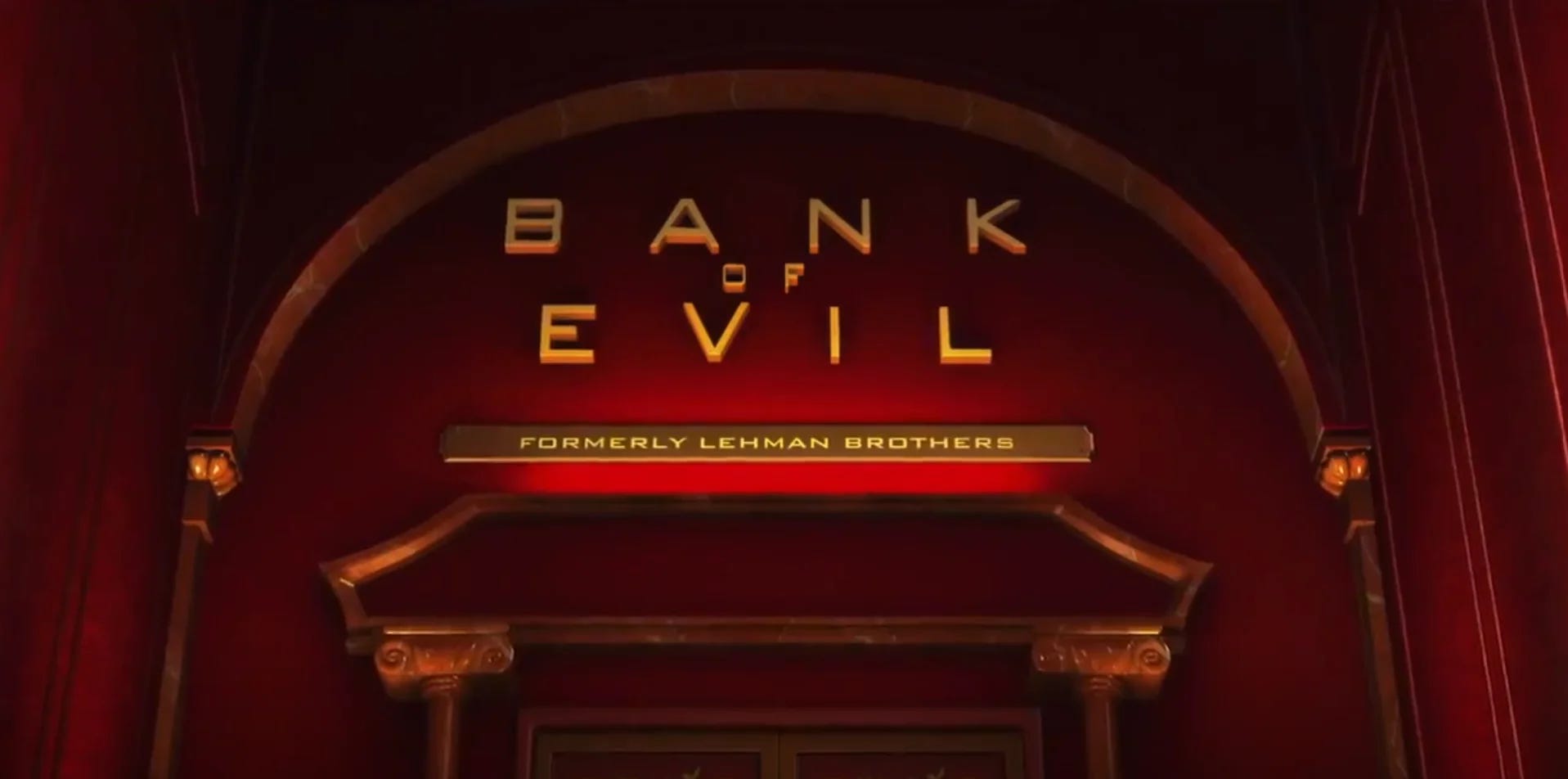
Brian highlighted a memorable scene from Despicable Me in which Gru visits the Bank of Evil to ask for a loan. Eagle-eyed viewers will notice the sign underneath the bank’s name: “Formerly Lehman Brothers.” It’s a blink-and-you’ll-miss-it joke, but one that perfectly captures how synonymous Lehman Brothers became with the financial crisis.
Brian also gave a shout-out to his book, Potternomics: Why Wizards Still Live in the Dark Ages. Since the first Harry Potter film premiered in 2001, it also serves as a nostalgic nod to one of the defining cultural phenomena of the decade we just spent exploring.

Matt’s first recommendation comes from The Big Short, specifically the scene that introduces mortgage bonds and explains how home loans were bundled together and sold throughout the financial system. It’s one of the clearest and most entertaining explanations of the financial plumbing behind the housing crisis and pairs perfectly with this week’s discussion.
Matt wrapped things up with a clip from The Office where Warren Buffett unexpectedly appears as a job applicant. Even one of the world’s most successful investors wasn’t immune from becoming part of the cultural conversation surrounding the Great Recession.
Have a question or topic idea? Reply to this email or drop it in the comments!


