



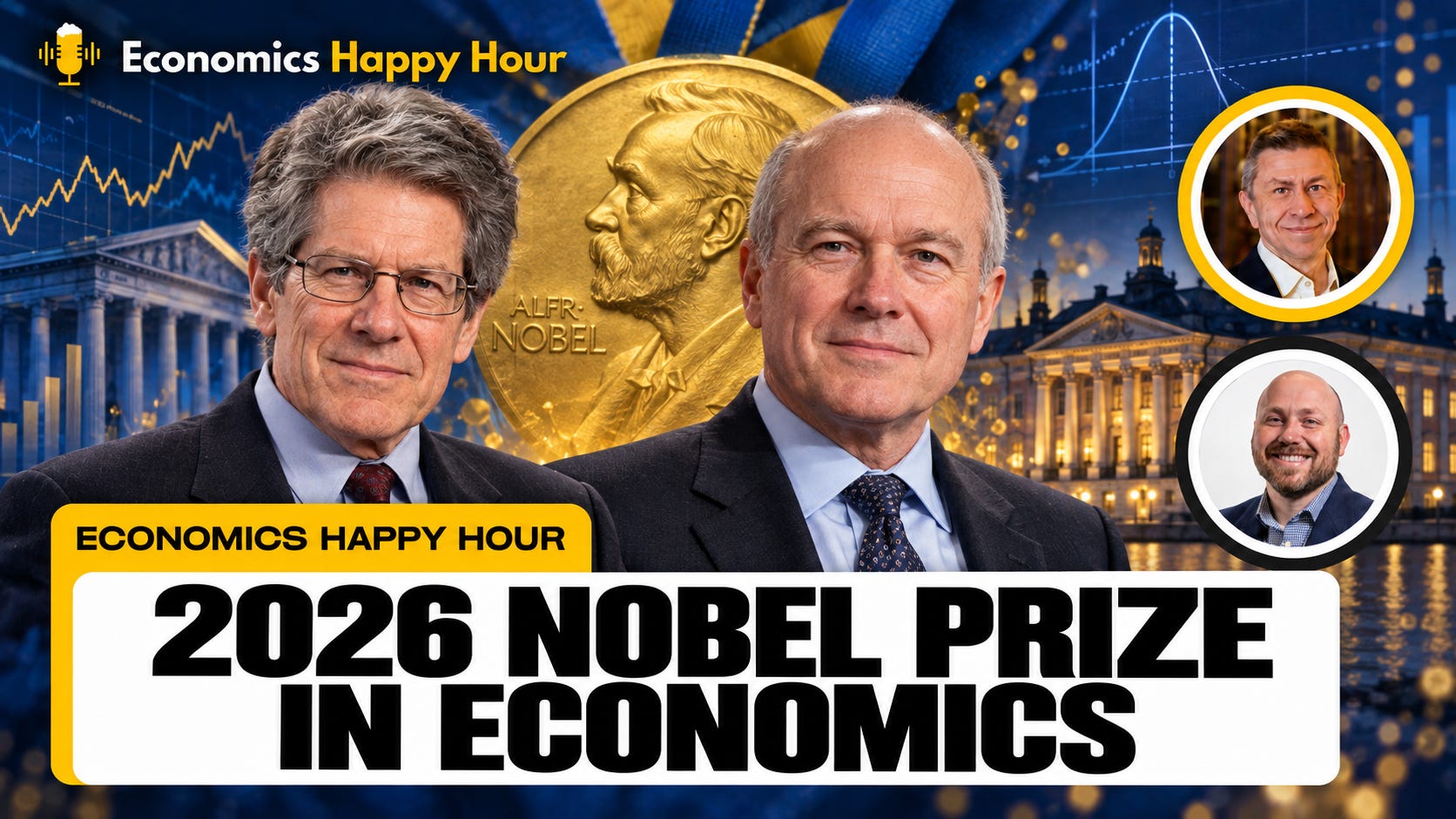
What does this year’s economics Nobel have to do with your savings account or your next big purchase? We unpack Robert Hall and Michael Woodford’s contributions to understanding how expectations shape spending and economic policy. Along the way, we discuss consumption smoothing, why central banks explain their plans, and whether people really think as far ahead as economic models suggest. We also look at what prediction markets can tell us about Nobel favorites and why a quieter, more stable economy can be an achievement that’s easy to overlook.
In this episode, we talk about:
What prediction markets did, and didn’t, tell us about the Nobel winners.
Why expected lifetime income matters for spending today.
How central banks use communication to influence expectations.
Whether everyday financial decisions match economists’ models.
Why better tools for stabilizing the economy matter beyond academia.
If you liked this conversation, you might also enjoy
This Week’s Drinks 🍻
Jadrian grabbed a Richmond Lager from Hardywood Park Craft Brewery after a hectic day and had already started pouring before we hit record. Matt went seasonal with Saranac’s Festival Pils from its Oktoberfest variety pack, a departure from his usual IPA. We also caught up on fall break activities and upcoming presentations. Between everything going on, a little time off (and a good beer) was certainly welcome.
Name That Stat 📊
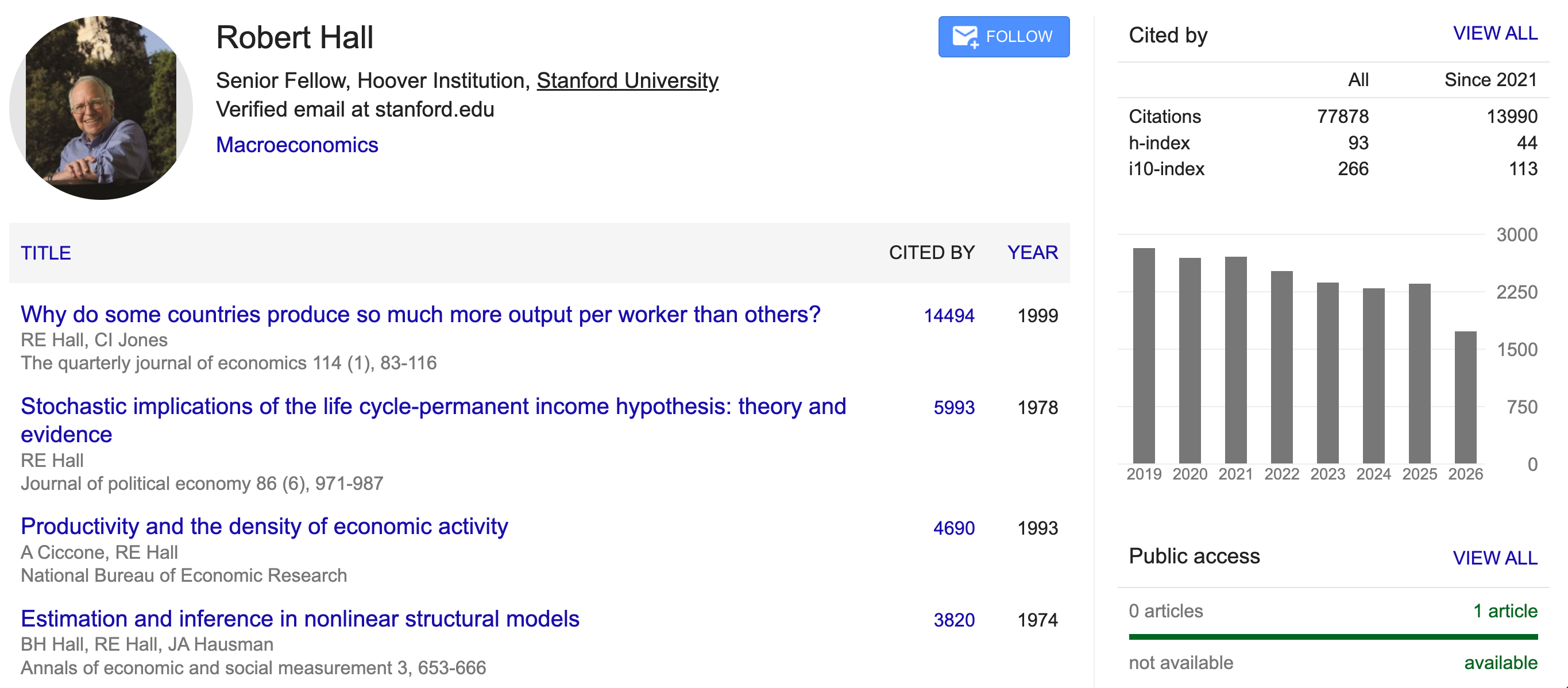
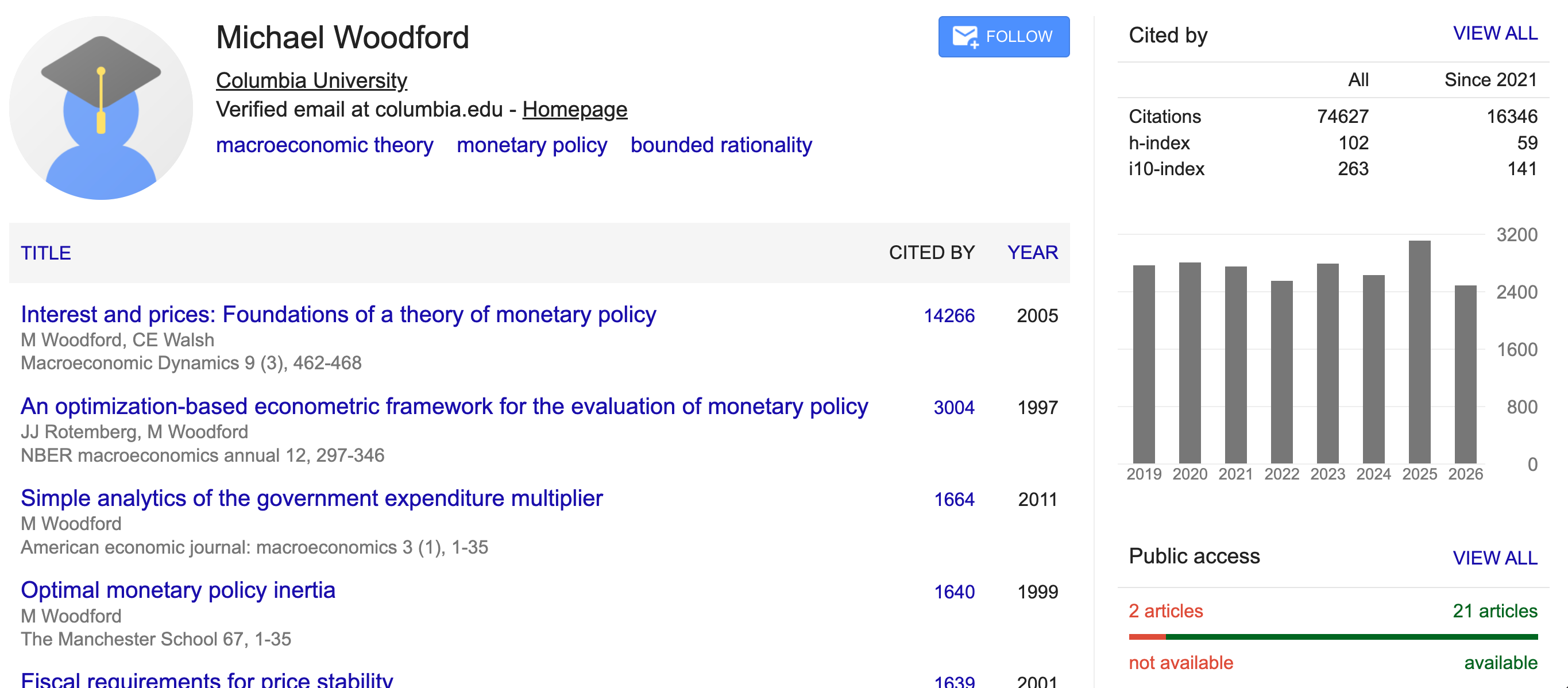
We initially skipped the guessing game, but we realized partway through the episode would be a good chance to talk about citations for our laureates. Each of them has garnered more than 70,000 citations for their work over their careers:
Show Notes
This year’s economics Nobel went to Robert Hall and Michael Woodford for their work on the microeconomic foundations of macroeconomic stabilization. That’s a pretty technical way of saying that individual households' and businesses' decisions help policymakers respond to recessions, inflation, and economic shocks. Speaking of expectations, we actually had the chance to see the people prediction markets thought had the best odds of winning the prize the day before the awards were announced. Neither had an especially clear favorite. Woodford appeared near the top of Polymarket’s predictions, while Hall wasn’t among the leading names.


Neither of us would describe ourselves as macroeconomists, but we wanted to take a closer look at what made their research so important. Hall’s work gives us a way to think about why spending doesn’t simply rise and fall with every paycheck. Building on the permanent income hypothesis, the idea is that people consider their longer-term resources when deciding how much to consume. New information can change that plan immediately. If you learn today that you’ll lose your job in six months, you probably won’t wait six months to adjust your spending. The important distinction is between a temporary change and news that changes what you expect to earn over the long run.
One of Woodford’s main contributions looked at why central banks spend so much time explaining their decisions. Monetary policy works partly through what people expect interest rates and economic conditions to look like in the future. That makes credible communication part of the policy itself. A change in interest rates won’t affect every household in the same way, but it can make a big difference for someone buying a home or a business deciding whether to borrow and invest.

The natural question then is how far ahead do people actually think? We both have personal experiences where we’ve made poor financial decisions that affect our futures, but there are also plenty of people saving for a down payment, borrowing while in college, or creating an emergency fund. It all involves thinking about the future. Expectations matter, even when people have limited attention, limited borrowing options, or habits that are hard to change.
The biggest payoff from their research has been a more stable economy than most of us truly appreciate, but we did want to consider what their work means for someone who isn’t building economic models. It helps if people slow down and try to distinguish a temporary financial bump from a lasting change before completing changing spending habits. That’s not to imply that every shock will disappear or that every household can easily absorb one, but it does help explain why the duration of a change matters.
We’d love to hear your thoughts! When has something you expected to happen in the future changed how you spent or saved today? Leave a comment with your example. We’d also love our macroeconomist listeners to help sharpen the connections between those everyday decisions and the bigger policy picture.
Pop Culture Corner 🍿
A former Virginia Tech graduate student sent Jadrian a scene from Emily in Paris in which the main character learns that being fired doesn’t necessarily mean immediate dismissal. Her coworkers explain that completing the termination process could take months. It’s a useful example to talk about differences across labor markets.
Matt shared a scene from Schitt’s Creek, where the Rose family loses its fortune, but one member finds an active credit card and uses it to buy expensive eye cream. Matt connected the scene to consumption smoothing since David is trying to preserve a piece of his old lifestyle despite a dramatic change in his circumstances. Maybe he’s expecting the family’s financial situation to improve, or maybe he just really wants that eye cream?
Have a question or topic idea? Reply to this email or drop it in the comments!


